Part of an occasional series on places across North America named for the Morrill family.
Not every namesake was a statesman. Sometimes a place just belongs to a family, and the name follows.
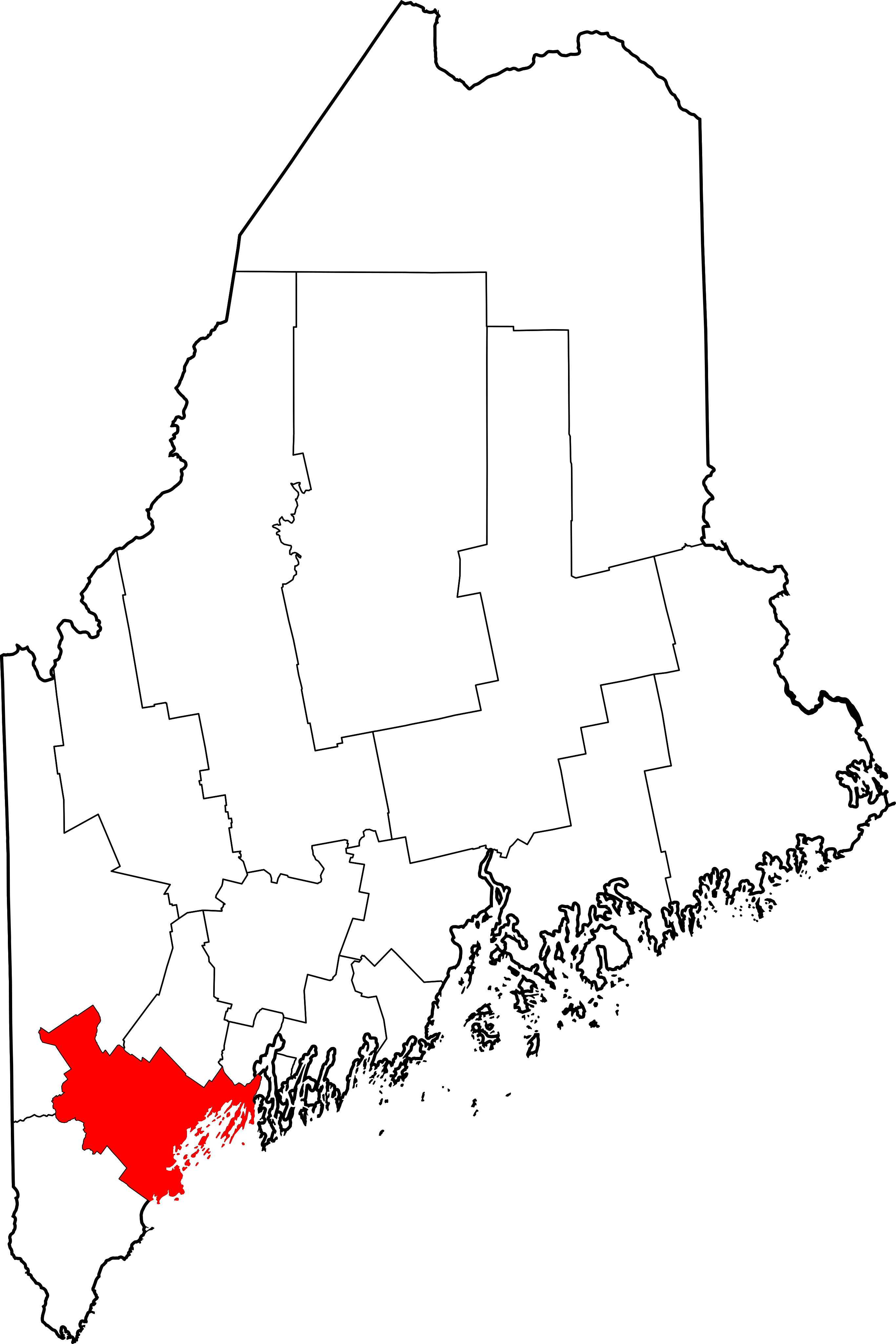
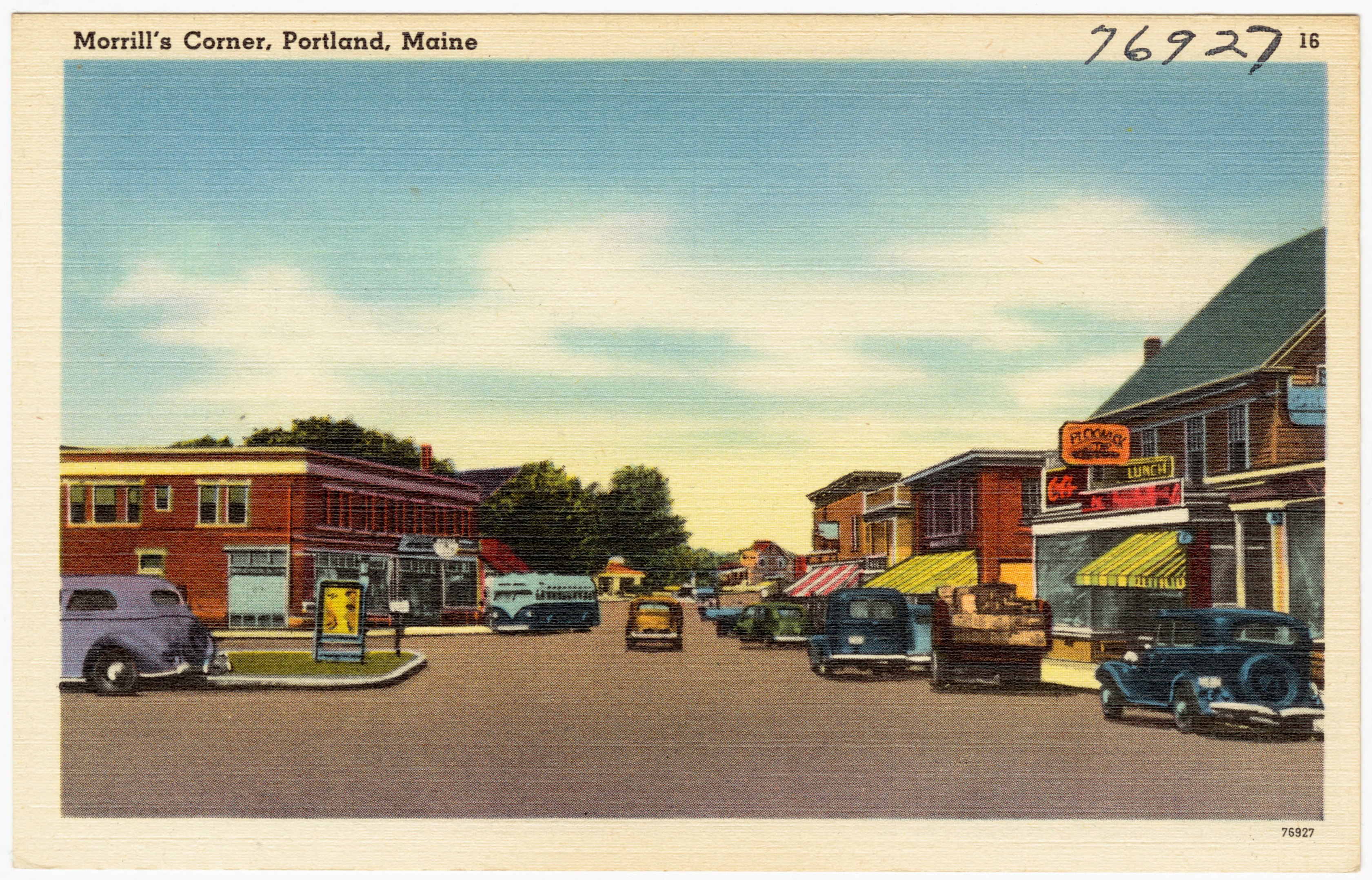
That’s the story at Morrills Corner, a historic crossroads in the Deering section of Portland, Maine, where Forest, Stevens, and Allen Avenues all meet. Long before Deering was annexed by Portland in 1899, this was Morrill land.
The corner takes its name from brothers Rufus and Levi Morrill. They were living there in the early 1800s, according to Greater Portland Landmarks, the local preservation group that has traced the neighborhood’s old houses street by street. Levi was a tanner, working Morocco leather and cowhide out of two sites near the crossroads: one on what’s now Allen Avenue, another on Forest Avenue. A local house historian traced the story of 1245–1247 Forest Avenue, the old Morrill homestead, back through property deeds and notices in the Eastern Argus newspaper. That research is where this comes from — along with the date of Levi’s death: New Year’s Eve, 1868.
His son, Charles Edwin Morrill, carried the tannery forward. He also left a paper trail of his own: three U.S. patents, still on file with the Patent Office today, for improvements to how shoe-binding leather was made. A manufacturing process in November 1871. A fastening device in January 1873. A leather-evening machine, filed jointly with a Biddeford partner, in February 1874. Each one lists the inventor plainly: “Charles E. Morrill, of Deering, Maine.” A grandson, also named Levi, kept the business alive in Boston after Charles Edwin’s death in 1891. He himself died in 1904.
The neighborhood had one more brush with prominence. Lot Myrick Morrill grew up at the corner and lived there until he was twenty-three. He’s the same Lot Morrill who went on to be governor of Maine and U.S. Treasury Secretary, before politics carried him off to Augusta and then Washington. His exact relation to Rufus and Levi’s household isn’t yet pinned down.
Another branch of Rufus and Levi’s family is worth a story of its own. A descendant, also named Charles Sumner Morrill, left the leather trade behind and co-founded a Portland canning company that’s still a household name today. That’s a big enough story — B&M Baked Beans is among Maine’s most famous exports — to earn its own article down the road.
Today the corner is a busy commercial district, and a stop on Maine’s passenger rail line besides. The bustle has changed completely. The name hasn’t. It still points back to one Yankee family, and the land they once called their own.